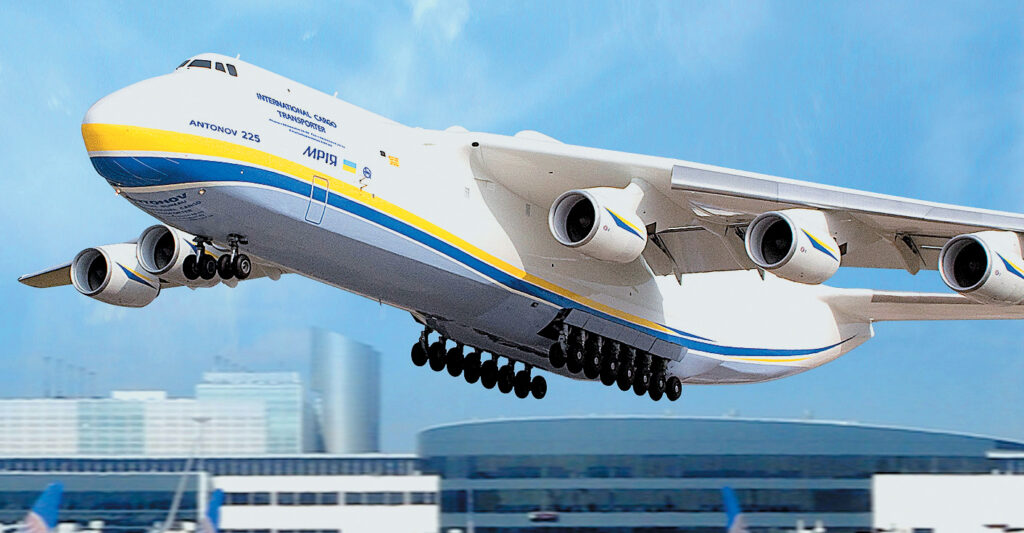
Meet the Antonov An-225 Mriya: aviation’s ultimate heavy-lift titan. Forget conventional freighters; this six-engine colossus rewrites the rules of payload and range. Imagine an aircraft capable of swallowing entire locomotives or a complete space shuttle system – that’s the Mriya’s daily reality. Its cavernous cargo bay stretches over 43 meters long and stands 4.4 meters tall, offering unrivaled volume for outsized equipment that simply can’t travel any other way.
Engineers crafted this beast for a singular Cold War mission: transporting the Soviet Buran space shuttle piggyback-style. Those origins forged an utterly unique machine. Notice the twin-tail configuration? That essential design allows massive external loads to ride atop the fuselage without disrupting airflow. Up front, a hinged nose section swings skyward, enabling straight-in cargo loading that bypasses complex disassembly. Underneath, a staggering 32-wheel landing gear array distributes immense weight, while reinforced titanium flooring handles concentrated loads exceeding 250 tonnes.
Performance? It’s staggering. The An-225 devours distance, connecting continents nonstop across its maximum 15,400 km reach. Six Progress D-18T turbofans, each generating nearly 51,600 pounds of thrust, propel this giant to cruising altitudes where efficiency reigns supreme. While it won’t break speed records, its true brilliance lies in hauling unprecedented weight – certified for a jaw-dropping maximum takeoff weight of 640 tonnes. Picture moving power plant turbines, entire windmill assemblies, or disaster relief supplies in a single, globe-spanning hop.
What truly sets the Mriya apart is its specialized niche. Forget passenger cabins; every cubic meter serves payload. Sophisticated internal cranes, powerful winches, and adaptable tie-down systems transform the hold into a secure transit hub for impossibly large freight. Operators cherish its ability to slash transit times for critical infrastructure projects, turning weeks-long logistical nightmares into direct point-to-point deliveries. Though only one fully operational example ever flew, its legacy as the undisputed heavyweight champion of the skies remains unchallenged – a breathtaking testament to engineering audacity built for missions only it could accomplish.