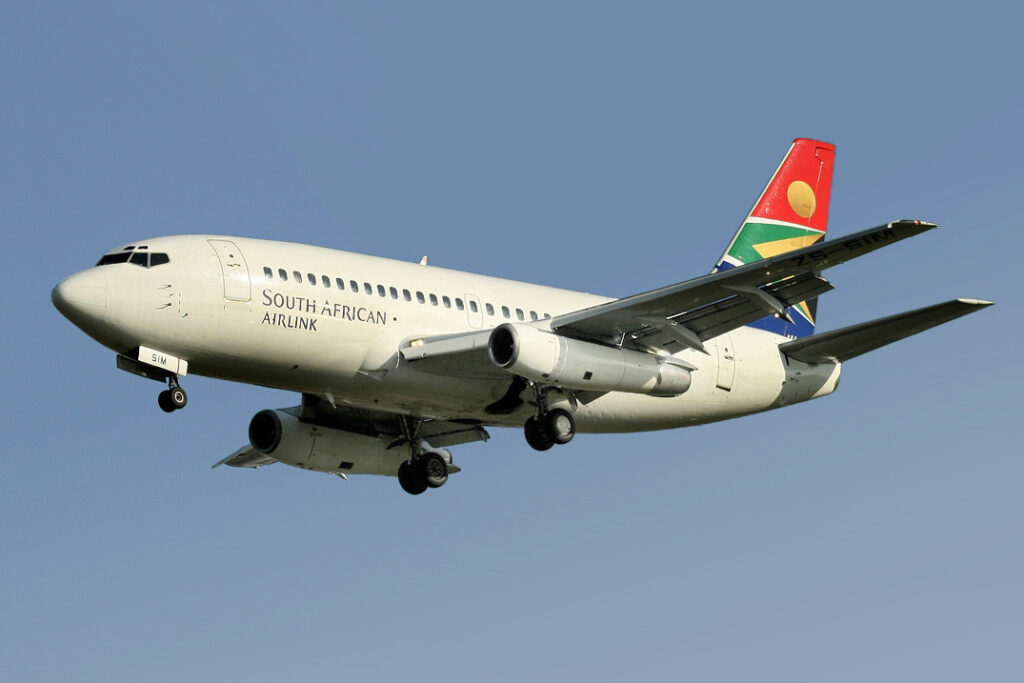
Think of the modern air travel system’s backbone: the Boeing 737-200. This typical narrow-body was not merely another jet; it rather reshaped regional flights, interlinking cities on high efficiency level much earlier than ‘point-to-point’, the industry codeword, was even used. This is not a flight; forget miserable seating, and boarding inside this airplane is genuinely different, just enjoy a spacious aerial environment of more than 21 meters length. You receive a huge headroom of 2.19 meters and a 3.69-meter width that is indeed larger than many contemporaries. Visualize dropping the middle seat and walking down the aisle, like the interior space of a comfortable sedan. This well-thought-out layout meant that passengers were very comfortable regardless of the configuration, which could be either full capacity of 119 people or rather spacious.
Twinjet was the one that expressed that performance. Its cruising speed, at a rapidly high speed of 817 km/h (approximatley 507 mph), makes very short distances which had previously taken a long time become secure for a flight. Traveling up to 4800 kilometers directly? The 737-200 might run New York to Denver or London to Istanbul extremely easily and with almost no drops. The standard twin-engine efficiency was its character, giving airlines a strong reduction in cost with no damage to performance. The crew adored its light-care system, fast control, and strong technology, a name-brander from many safe takeoffs and landings.
Although ‘opulence’ in today’s concept of private jets was not its key target, the 737-200 brought outstanding cost-effectiveness and comfort according to its time. Airlines cashed in that significant aircraft space with the construction of unexpected cozy cabins. Imagine a lot of overhead bin space, busy aisles that make boarding and movement to and from seating very easy, and a perfect framing of the sky by large windows. Besides the above, the seating in the plane usually is laid out with a good amount of pitch so that the journey is not as exhausting whether it is a regional flight or a long transcontinental trip. The cabin feels open and airy, which is largely attributable to the smart engineering of Boeing that maximized the fuselage space that was actually usable.
What made the -200 different was the simplicity and power it materialized. On shorter and more challenging flights where many jets would hesitate, it not only coped but thrived in that environment, thus creating opportunity routes toward smaller airports and developing areas. Airlines in all parts of the world (from big companies to very small operators) took advantage of this aircraft for its steady operation and low costs. This quality made it a real workhorse of aviation. Decades endorsed style of the Boeing 737-200 that has been designed with a non-classical yet practical approach still defines today’s philosophy of air transportation – efficient, passenger friendly, and flexible operation. It was never just an airplane; it was a key factor for air travel to become accessible and dependable.