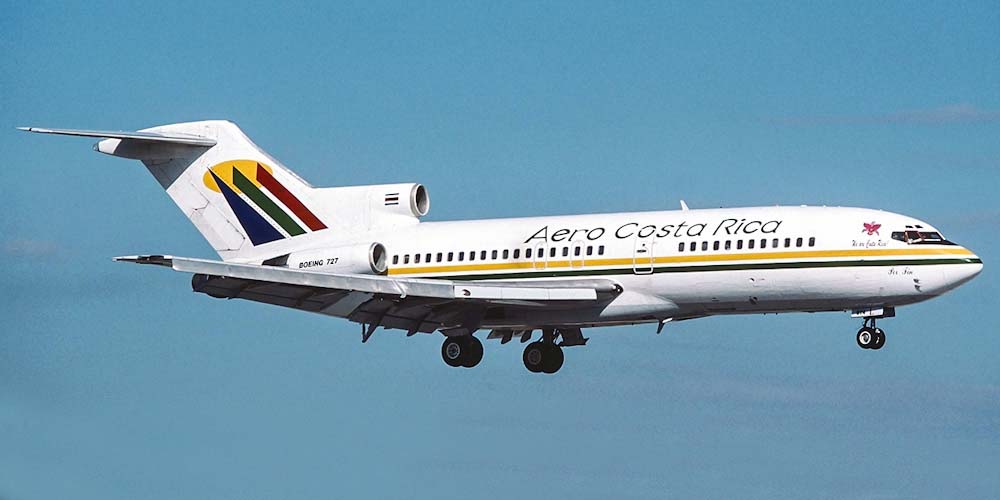
Think ‘trijet trailblazer’ and you’ve nailed the Boeing 727-100. This aviation icon didn’t just connect cities; it rewrote the rulebook for short-to-medium haul travel when it roared onto the scene. Forget delicate handling; the 727-100 was built tough, conquering shorter runways that left competitors grounded. Its unique three-engine layout, with that distinctive S-duct feeding the center engine nestled in the tail, wasn’t just for show. This configuration delivered serious grunt, enabling impressive ‘hot-and-high’ performance where thinner air and scorching tarmac cripple lesser birds. Need to leap off a high-altitude strip in the Rockies or navigate a tropical island’s compact airfield? The 727-100 scoffed at the challenge, needing surprisingly little asphalt to claw its way skyward.
Step inside its cabin, and you weren’t just flying coach; you were experiencing a benchmark in efficient comfort for its era. Imagine seating configurations that could swallow a small army of 129 souls, or be tailored for fewer passengers with generous legroom – a flexibility charter operators adored. Large picture windows bathed the interior in natural light, making even longer journeys within its 4170 km maximum range feel less confined. While modern fly-by-wire systems were decades away, the 727’s cockpit represented cutting-edge avionics for its time, giving pilots precise control and the capability to handle demanding Category II instrument approaches, boosting reliability when weather turned sour.
This bird wasn’t just about brute strength; it possessed a certain elegance in its efficiency. The trijet design balanced power with fuel economy (for its day), making it a beloved workhorse for airlines needing a versatile performer. Its rugged landing gear and robust airframe shrugged off the relentless pace of frequent, shorter hops. For operators threading routes between bustling hubs and regional airports with limited infrastructure, the 727-100 offered an unmatched blend of payload, reach, and runway independence. It became the backbone of countless fleets, a testament to Boeing’s genius in crafting an aircraft perfectly suited to the evolving demands of the jet age. Its distinctive shape and unmistakable whine from those rear-mounted engines remain instantly recognizable, a true legend that defined an era of accessible air travel.