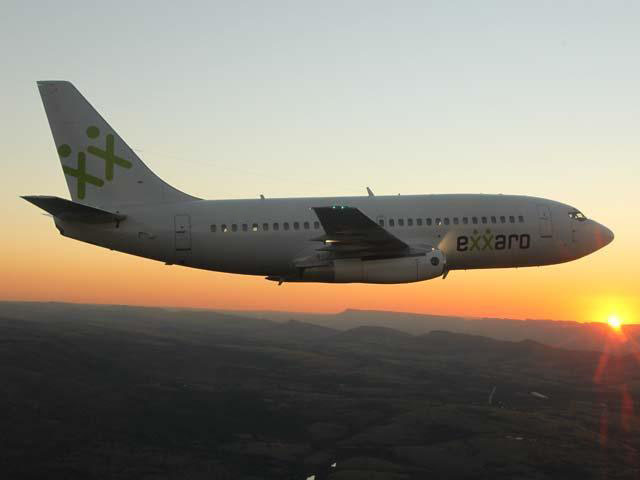
Introducing the Boeing 727-200, the absolute workhorse par excellence that redefined regional travel. This trijet icon is a pure design statement that has nothing to do with cookie-cutters. Well, it is not just for the looks; it really proves its statement. Everyone who has a third rear skin engine right there on the aircraft is able to take off a lot shorter and say bigger or more difficult conditions. It didn?t just take people from one point to the other; it linked cities and economies like no other.
Did you catch the rear-mounted third engine? It is 100% pure genius. Getting a lateral air feed system and an S-duct that vents down air gave the 727-200 a masterful performance on hot and high airports. This is why this model could be used on airfields located in rugged mountains or on hot days where other aircraft are reticent to land. The new model was so sturdy that it could take more than one jet type from the original length- and freight-restricted runways. Pilots were delighted by the agility of the aircraft and are persuaded even more by the three-swept Pratt & Whitney JT8D turbofans that generated additional power to cope with the situations that were signed resilient.
Imagine getting into a cabin that is filled with optimal space utility. The typical two-class configuration for around 150 travelers meant that the very plane model was 727-200 capable of carrying up to 189 travelers legally. Airlines were delighted by this versatility. The fuselage diameter, wider than in the 707 model but narrower than in the later wide-body designs, created an unexpected feeling of space that was not common for that time. Accommodating the galley and lavatory to logical locations maximized the total area available for the passengers. Singular air conditioning and large windows also contributed to the comfort level to a great extent, even in long-haul flights.
While the plane would fly a distance of 4020km (approx. 2500 statute miles), it also had the power to do so. This capability directly related to the plane’s real-world routes that it could fly. Various kinds of direct flights, such as flights between major cities like New York and Denver, London and Istanbul, or even São Paulo and Buenos Aires, which did not require any detours to refuel by making it a straightforward point-to-point trip, jumped into one’s mind. Travelers benefited from cut fuel costs and time savings in the short run while, in the long term, new routes contributed to the economic growth of businesses and tourism.
More than just the flight features, the 727-200 residual benefits were a highlight. It was built to be simplicity itself for mechanics. The three engines which were the most important parts were very close to the engineers. Checks of the main systems were done without large disassembly of the plane. The engine in the back? Mechanics could have access to the important parts of the engine right from the inside of the tail cone through a dedicated access door. The result was a well-thought-out design that brought down both turnaround times and long-term operational costs, enabling the planes to stay on the market and make money for so long.
Even though modern-sided planes are fitted with slight engines that use bigger energy efficiency, the 727-200’s catching was undeniably huge. It managed to reach where others failed, carry substantial passenger loads over considerable ranges just by being practical, or with the aircraft’s Ordinary operational reliability turn them into legends. It was a plane of its time, the one that had the right place and the right function, and it was no less than a true aviation pioneer that showed the world that three engines can create a very unique sweet spot. Serious operators needing big payloads into tough airfields or packed regional routes with the 727-200 were not just an option but for quite some time the only possible answer.