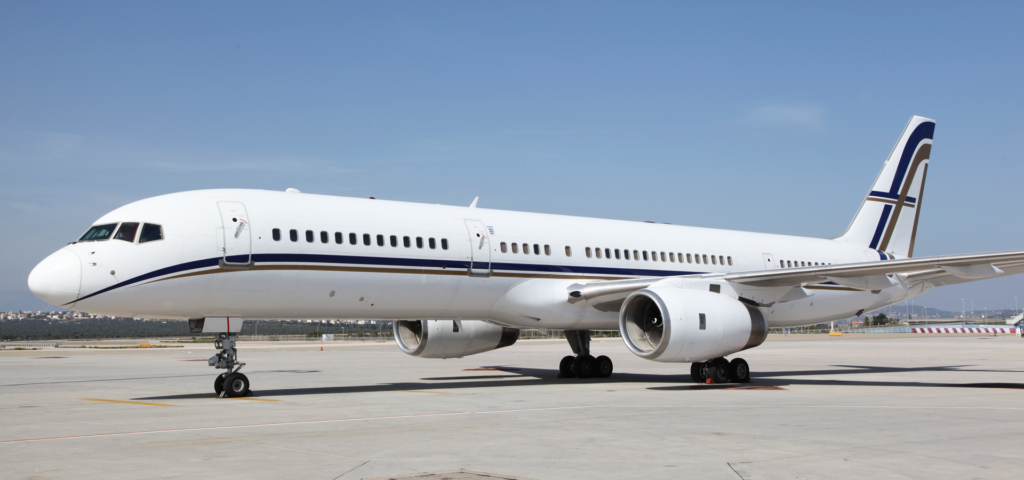
Imagine a narrowbody plane that regularly takes on transatlantic flights while packing a punch in terms of performance, and that’s the Boeing 757-200. Say goodbye to cramped spaces – as soon as you enter, you’ll notice the roomy 2.15-meter ceiling height. No need to duck here! You get to stretch out in the fantastic 36.07-meter long cabin, which is a comfy 3.57 meters wide. That means there’s good space for your elbows, and it can seat up to 220 folks without feeling squished. And if you’re worried about where to stash your bags, no problem! This plane has a huge luggage space of 50.8 cubic meters, so there’s plenty of room for everyone’s stuff on those long flights.
Now, let’s talk about performance. It’s impressive! Those two engines zip you along at a swift 854 kilometers per hour, covering distances that would leave other planes grounded. The real standout feature is its maximum range of 7,222 kilometers. You can fly nonstop from London to New York, Frankfurt to Washington D.C., or Milan to Dubai – all of that is totally doable. This capability changed the game, allowing lots of direct routes that used to be thought of as impossible for single-aisle jets. It’s the go-to choice for longer flights where bigger planes just don’t make sense.
What really surprises passengers is how spacious it feels. That cabin width, which was wider than other planes when it first came out, means you get bigger seats and aisles. When you mix that with the height, it creates a breezy, open vibe – a huge plus on those long trips. The design strikes a perfect balance by making sure passengers are comfy without giving up on performance. This aircraft found its place in the market by mastering the combination of flying far, fast, and full, showing that you don’t always need a huge aircraft to fly across oceans efficiently. It’s a shining example of smart engineering that changed the face of air travel and what passengers expect.